
AI Proof Careers: Why Film Installation Tops the List
Every time you scroll social media, another headline says AI is coming for your job. Software engineers are getting replaced. Graphic designers are panicking. Writers are out of work. When you spend your day on your feet, heat gun in hand, wrestling film around compound curves, it is fair to wonder: am I next?
The answer is no. Film installers have an AI proof career, and the data backs it up. Not speculation. Not motivational talk. Actual research from Oxford, McKinsey, the Bureau of Labor Statistics, and the market firms tracking billions of dollars flowing into this industry. This article breaks all of it down so you can see exactly where you stand -- and why the next ten years look better for your trade than almost any other.
What AI Actually Replaces
Before we talk about why your hands are safe, you need to understand what AI is actually good at. Because the headlines make it sound like everything is being automated. It is not. AI excels at processing digital information. Recognizing patterns in data. Writing text, generating code, handling customer service scripts, reviewing legal documents, crunching spreadsheets. The jobs disappearing right now are office jobs. Desk jobs. Jobs where someone sits at a computer doing predictable cognitive tasks all day.
The Bureau of Labor Statistics confirmed this in their 2025 employment projections. AI impacts are concentrated in computer, legal, business and financial, and architecture and engineering occupational groups. These are the industries watching their people get replaced by software.
McKinsey released their 2025 report on AI and employment. Their finding was that current technology could theoretically automate 57 percent of US work hours. But they explicitly stated this "is not a forecast of job losses." They framed the future as a partnership between humans, AI agents, and robots -- not a replacement. And they made clear that physical skilled work in variable environments remains firmly in human territory.
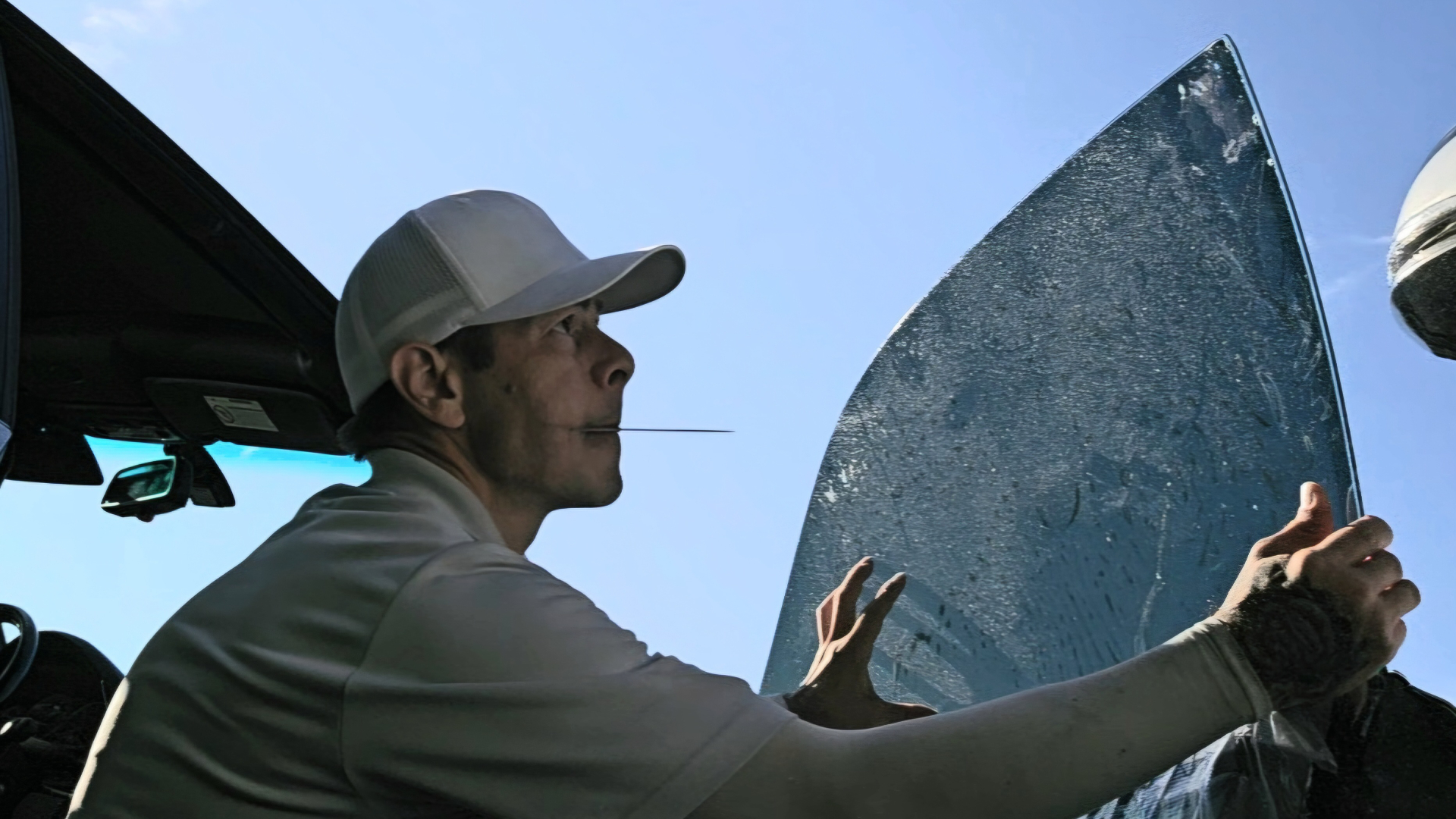
Why a Robot Cannot Do Your Job
- Every vehicle is different: Even two identical models off the same line have slight variations in glass curvature, body panel gaps, and seal alignment. You read those differences with your hands and your eyes and adjust mid-install. A robot would need complete recalibration for every vehicle it touches.
- Film reacts to its environment: Adhesive behavior shifts with temperature. Stretch changes with humidity. Contaminants show up in real time and you decide on the fly whether to lift, re-spray, or reposition. You are processing dozens of environmental variables simultaneously without consciously thinking about it. That is not programmable.
- Compound curves require spatial intelligence: Wrapping a bumper in PPF or shrinking tint to a back glass means taking a flat material and conforming it to a surface that curves in multiple directions at once. That requires the kind of spatial reasoning and hand-eye coordination that robotics researchers admit they are decades away from solving.
- Tactile feedback is everything: You feel when film is about to crease before it happens. You sense trapped moisture or air through your squeegee pressure. You know by touch whether adhesive has fully activated against glass. Current robotic grippers cannot feel material tension, cannot sense slip, cannot detect micro-bubbles under film. They lack the basic tactile intelligence your fingertips have.
- The economics kill it: Even if someone built a robot capable of all this, the machine would need to handle thousands of different vehicle shapes, adapt to variable shop conditions, and manipulate material that behaves differently every single day. The engineering cost would be astronomical compared to hiring a trained tech. There is zero economic incentive to automate film installation.
The Market Is Doubling
This is not an industry holding steady. It is exploding. Here are the projections from the firms tracking the money. The global automotive film market was valued at 12.8 billion dollars in 2025 and is projected to hit 26.3 billion by 2033 at a 9.5 percent compound annual growth rate. That is Grand View Research. The market is more than doubling in eight years.
Automotive wrap films are estimated at 10 billion in 2025 and predicted to reach 50.78 billion by 2035 according to Precedence Research. Five times current size in a decade.The global window film market sits at 2.56 billion in 2025 and is projected to reach 4.52 billion by 2034 at a 6.5 percent growth rate, per Fortune Business Insights.The US paint protection film market was valued at 105 million in 2023, growing at 6.2 percent annually through 2030.
Every one of these numbers translates to the same thing for you: more vehicles needing film, more buildings needing film, and more demand for the people who know how to put it on. The growth drivers are straightforward. Electric vehicles have massive glass roofs and owners who understand heat rejection protects battery range. Rising energy costs are pushing commercial and residential window film demand higher. Vehicle customization has gone mainstream. Premium products like ceramic tint and self-healing PPF are raising the average ticket on every job.
More work is coming. Period.
The Installer Shortage Is Real
Here is the part that should make you feel good about your future. The industry is growing fast, but the number of skilled people available to do the work is not keeping up.
The broader automotive technician shortage has reached approximately 800,000 unfilled positions in 2025. The Bureau of Labor Statistics forecasts a deficit of 68,000 auto technicians per year for the next decade. These positions are not being filled fast enough
The workforce is aging out. The average age of an automotive technician in the US is 40 years old. Nearly half are over 45. That means a wave of retirements is coming over the next 10 to 20 years, and there are not enough young people entering the trades to fill the gap.
Within film installation specifically, the shortage is even tighter. Job boards are filled with posts demanding two to three years minimum experience. Training programs cannot graduate people fast enough. Markets in Australia and the Middle East are actively recruiting experienced installers from overseas because they cannot find local talent.
What does a labor shortage mean for you as a working technician? Higher pay. More options. More leverage. When demand outpaces supply, the person with the skill sets the terms. That is the direction this is heading, and it is accelerating.
The BLS projects that employment in installation, maintenance, and repair occupations will grow faster than the average for all occupations from 2024 to 2034. You are in a category that is expanding while white-collar work contracts.
https://www.bls.gov/
How AI Helps You Instead of Replacing You
AI is not your competition. It is the best set of tools to come along since the plotter cutter.
Pattern cutting software uses algorithms and machine learning to optimize cuts, reduce waste, and speed up prep time. You still install. The machine just gives you better material to work with.
Customer visualization tools can show people what different tint levels or PPF coverage will look like on their specific vehicle before you start the job. Fewer surprises, fewer callbacks, easier upsells.
Scheduling and communication tools powered by AI can handle appointment booking, quote follow-ups, and review requests automatically. Less time on your phone. More time installing.
Training and technique analysis tools can help newer techs identify mistakes faster, shortening the learning curve from years to months.
The technicians who use these tools will earn more than the ones who ignore them. Not because the tools replace hand skills, but because they eliminate the friction that slows everything else down. Your hands are still the product. AI just clears the path.
What the Next Ten Years Look Like
This trade is evolving from "car customization" into glass performance technology. That shift matters because it means the work is expanding into areas that barely existed five years ago.
EVs are growing globally and they are rolling off the line with more glass surface area than any vehicles before them. Panoramic roofs, full-length windshields, rear quarter glass that wraps into the roof. Every square inch is potential work.
Residential and commercial film is booming because building owners are watching their energy bills climb. Solar control film is one of the most cost-effective efficiency upgrades available. Security film demand is rising as well.
Smart film and switchable glass technology is emerging. Some people assume this replaces traditional film. The opposite is true. Smart film requires professional installation. It adds complexity. It raises the skill bar and the price point. It creates demand for more skilled technicians, not fewer.
Premium service stacking is raising revenue per customer. Tint plus PPF plus ceramic coating as a package is becoming standard at the high end. The tech who can do all three is worth more than three separate techs who each do one.
Certification and training are professionalizing the trade. As products get more advanced and customer expectations rise, the people who invest in their skills will command the highest rates. The industry rewards the ones who take it seriously.